Based in the bustling city of Mumbai, Topiwala National Medical College is one of the leading medical colleges not just in India but globally.
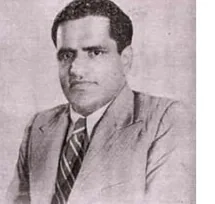
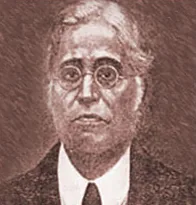
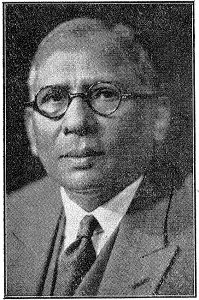
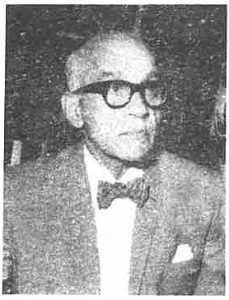
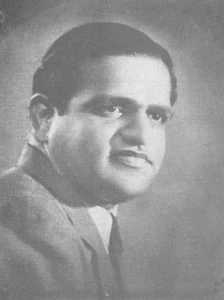
Mr. M.N. Desai (Topiwala)Dr. A.L. Nair
Timeline
From 1921 to today
1921
The National Medical College is born
Opened during the heady days of the Independence movement and appropriately named the ‘National Medical College’, TNMC holds a special place in Mumbai’s history as the first hospital made and run by Indians under the British Empire. The city’s other two big hospitals of the time, K.E.M. Hospital and Sir J.J. Hospital, were managed by the British.
Growth
Under the Municipal Corporation
The college was later taken over by the Municipal Corporation of Greater Mumbai, and its progress since then has been outstanding.
1946
Topiwala’s gift & Gandhi’s blessing
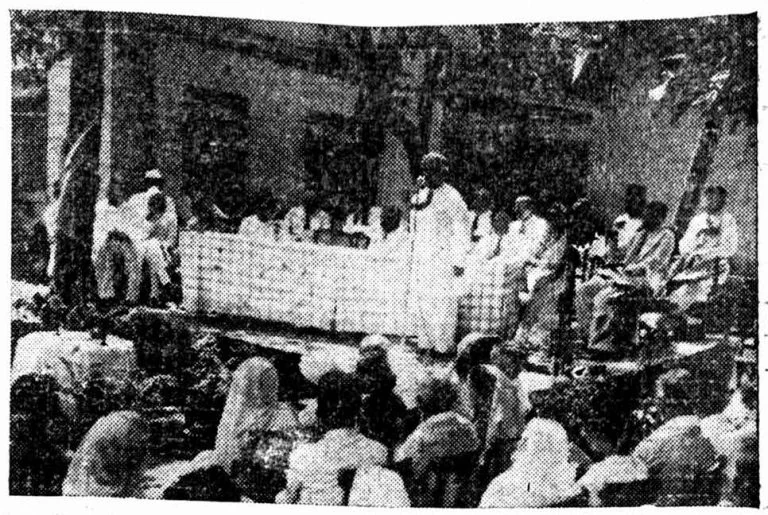
Through a donation by M.N. Desai Topiwala, after whom the college is named, TNMC was upgraded, inaugurated by Mahatma Gandhi and Sarojini Naidu, and received recognition for the MBBS course.
1956
An emblem of healing
The college emblem was adopted during the tenure of Dr. L. Monteiro as Dean: a staff entwined by a winged serpent, blending history, mythology and modernity.
2021
A hundred years of healing
On September 4, 2021, TNMC and BYL Nair Hospital celebrated their hundredth Foundation Day, opening a Centenary Year celebrated by students, faculty and alumni around the world.
Today
A breeding ground for 21st-century medicos
Backed by the 1,800-bed tertiary care BYL Nair Charitable Hospital, TNMC trains students in more than 25 medical and allied branches, including 9 super-specialty courses, with more than 250 senior teaching staff assisted by 400 resident doctors.
The founders
Two gifts that built an institution
Mr. M.N. Desai
Known as Topiwala Desai, he made generous funding to the college, which was then named after him as Topiwala National Medical College.
Dr. A.L. Nair
Donated land to build, and money to run, the B.Y.L. (Bai Yamunabai Laxman) Nair Hospital.
The emblem
May we be free from disease through education
Adopted in 1956, the simple design of the college emblem depicts a staff entwined by a winged serpent.
The staff represents the barber’s pole, recalling barbers as surgeons in olden times, and stands for the splints and bandages of emergency care.
The serpent is the mascot of Aesculapius, the Greek god of healing, and represents wisdom.
The wings symbolize the speed of healing and the change in methods of healing.
The Sanskrit motto at its base means ‘May we be free from disease through education’.
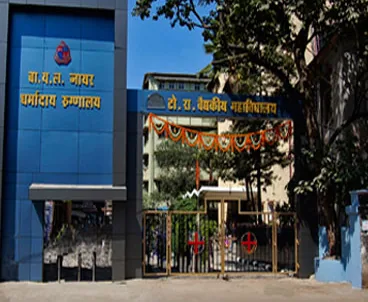
BYL Nair Hospital, Mumbai
Centenary essay
100 Years of Topiwala National Medical College & BYL Nair Hospital
The story of the city’s first Indian-run medical college and public hospital, as published in the centenary souvenir of B.Y.L. Nair Hospital and Topiwala National Medical College in 2022. Originally shared on Bombayologist, 4 September 2021.
The National Medical College (NMC) was opened on 4 September 1921 in response to the call by Mahatma Gandhi to establish new “national” educational institutions during the Non-Cooperation Movement, begun in 1920. Its first students came from those who boycotted Grant Medical College (GMC) and other state-run institutions, protesting the unequal opportunities to learn and practice medicine in colonial India.
The NMC became the second major medical college in the Bombay Presidency, the colonial province which covered most of western India. Its pioneering founders and faculty sought to “bring medical education within the reach of poor but deserving students” by “imparting sound training to Indian youth of moderate means and of cultivating among them a spirit of research and of service for suffering humanity”.
The college was a novel experiment which few expected would succeed – including Mahatma Gandhi. Supported entirely by public donations and student fees, it was taught by the city’s medical professionals on an entirely honorary basis in its initial stages.
A novel experiment which few expected would succeed – including Mahatma Gandhi.
NMC was founded by Dr Dinkar Dhondhdev Sathaye, an ophthalmic surgeon and nationalist who had been Secretary of the Indian Home Rule League and the Bombay Provincial Congress Committee (BPCC) during World War I.
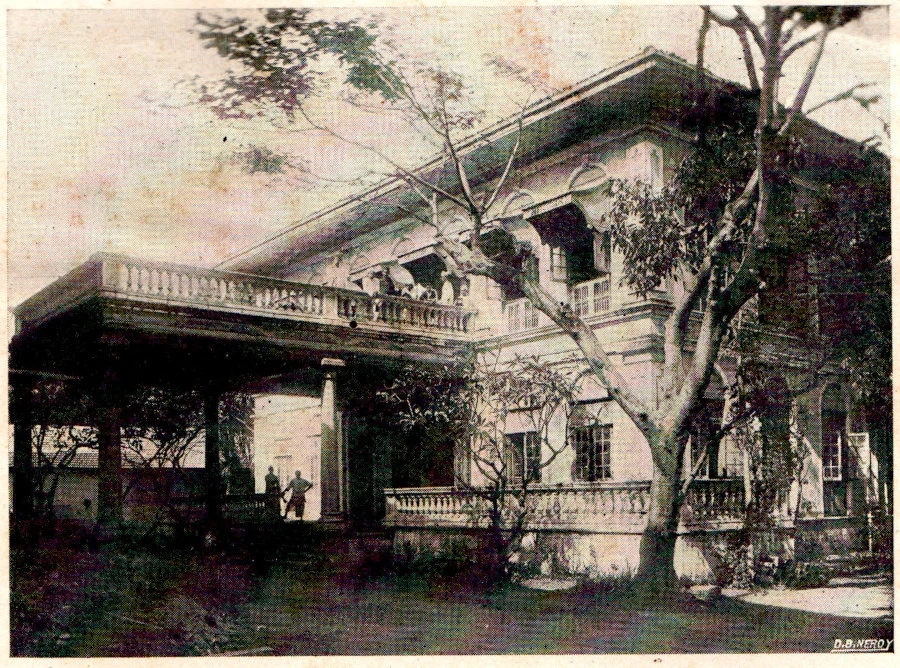
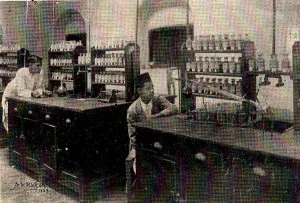
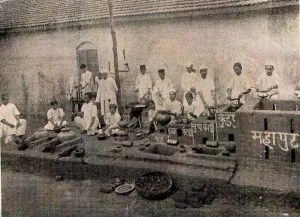
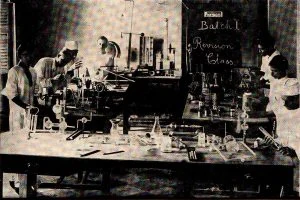
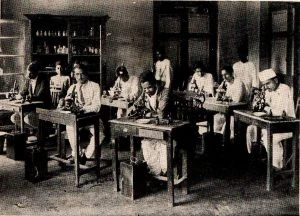
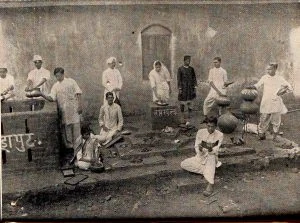
With 136 students enrolled in its first year – of whom less than ten were female – the college was started in a large bungalow located behind Rani Baug at 2nd Victoria Cross Lane in Byculla, with classrooms, laboratories, dissection rooms and an Ayurvedic manufacturing unit.
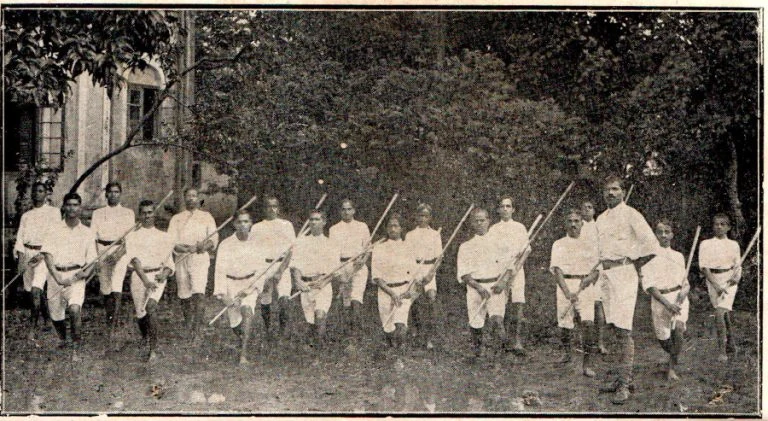
The first building (above) and batch of students (below) of the National Medical College, begun in a rented bungalow behind the Victoria Gardens (Rani Baug), Byculla, 1921–27
Fees were Rs 60 per term. Evening lectures on medicine by well-known practitioners were held to packed audiences of medical students from across the city, including those from nearby GMC. A large residential hostel was built with accommodation for 150 students, from which the college earned rent.
Fund-raisers and charity performances were held in which thousands of rupees in donations were received, scholarships and prizes awarded to students, and prominent visitors were hosted. Grants and loans were received from the BPCC and its Tilak Swaraj Fund.
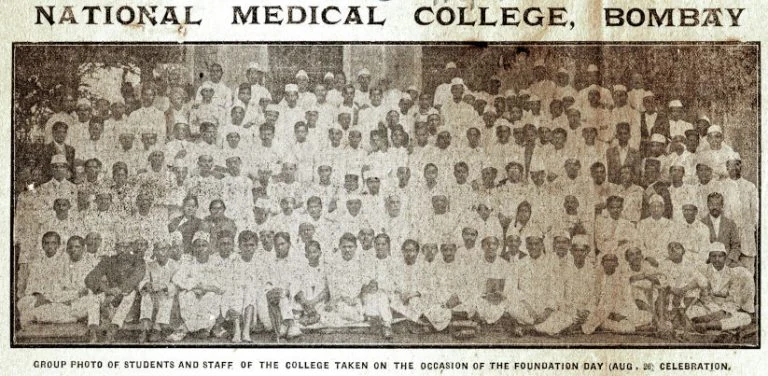
Professors, tutors and students of National Medical College on its first Foundation Day in 1922
Modelled on courses in London and Edinburgh where Dr Sathaye had studied, the college initially offered a five-year general medical course, a four-year dental course, and a three-year BSc course. Faculty was almost entirely comprised of Indian surgeons and physicians who had graduated from British universities.
Students were required to study Hindi and either German or French (to facilitate study abroad). Ayurveda and Yunani were taught in parallel to Allopathy, and Indian medicines were made at the college and distributed in local dispensaries.
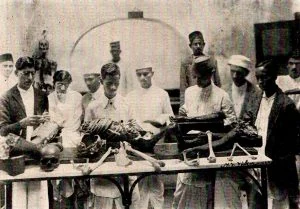
Cadavers for dissection and demonstration were provided by the Bombay City Police. Classes on botany were conducted by the college’s first Principal, Dr A.P. Kothare, in the Botanical Gardens of Rani Baug. NMC soon began offering postgraduate courses in applied chemistry, anatomy, bacteriology, and pathology.
NMC received generous donations of equipment and books from city practitioners, including the entire laboratory and library of renowned chemist and pharmacist T.K. Gajjar.
Free medical relief for the urban poor and clinical instruction to the students of the college was provided at the People’s Free Hospital in Agripada, the Aimai Merwanji Chamarbagwala Free Ophthalmic Hospital (Parel Eye Hospital) – earlier founded by Dr Sathaye – municipal clinics and maternity homes, and a general outpatient dispensary at the college in Byculla.
After his release from jail for Non-Cooperation in 1924, Gandhi visited the NMC with Sarojini Naidu. He apologised to Dr Sathaye for doubting whether the college would ever become a success. But the nascent college remained in need of its own affiliated hospital for clinical training of its growing body of students, whose numbers doubled every term.
The Bai Yamunabai Lakshman (BYL) Nair Charitable Hospital was endowed as a teaching hospital for the college by Dr Anandrao L. Nair (1861–1934), physician, businessman and philanthropist, who announced the gift in the memory of his late mother at a benefit performance by the Maharashtra Natak Mandali at the college in Byculla on 1 April 1923. The month before, Nair had dedicated the BYL Nair Dental Hospital where the course in dental surgery would open.
Dr Nair was proprietor of the city’s largest medical instrument and pharmaceutical manufacturers, N. Powell’s & Co. From a humble soldier’s family in South India, he studied and practised medicine in Mumbai. A few years into his practice, Nair started a retail chemists shop with an English partner in 1886.
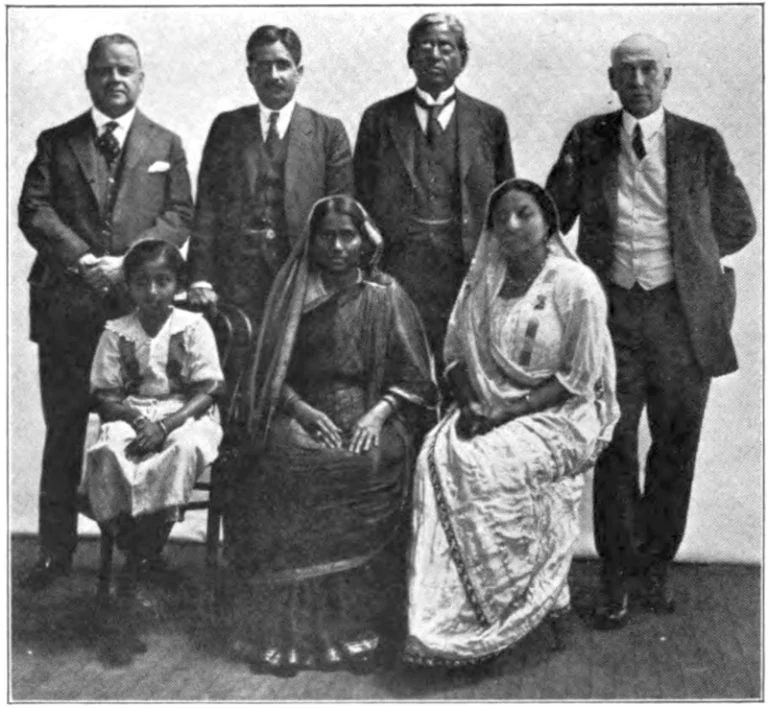
Dr Anandrao L. Nair (back row, third from left) on a visit to Johnson & Johnson’s Laboratory in New Jersey, U.S.A. with his wife (front row, center) from Red Cross Notes (Series VIII, No.1, 1919)
N. Powell’s & Co. manufactured medicines, surgical tools, orthopaedic appliances, aseptic hospital furniture, artificial limbs and other medical items, and were the Bombay agents for British and American suppliers. Their designs won awards in European and Indian medical exhibitions, and it diversified into chemical manufacturing, testing and research.
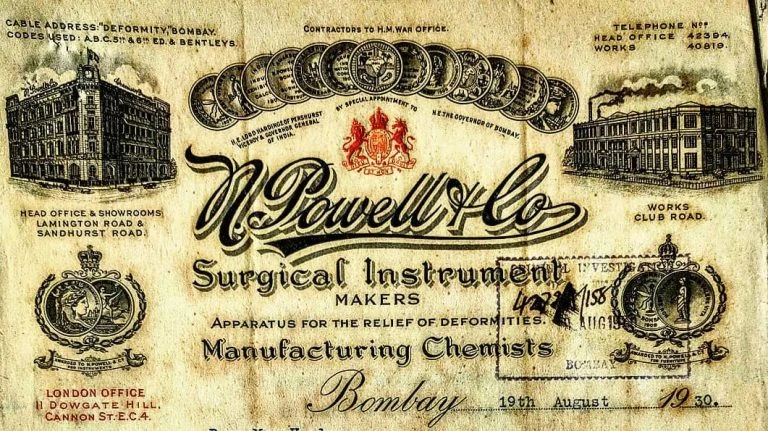
Letterhead of N. Powell & Co. in 1930, showing its office and showroom near Opera House and factory next to Bombay Central, the site of today’s Nair Charitable Hospital & National Medical College
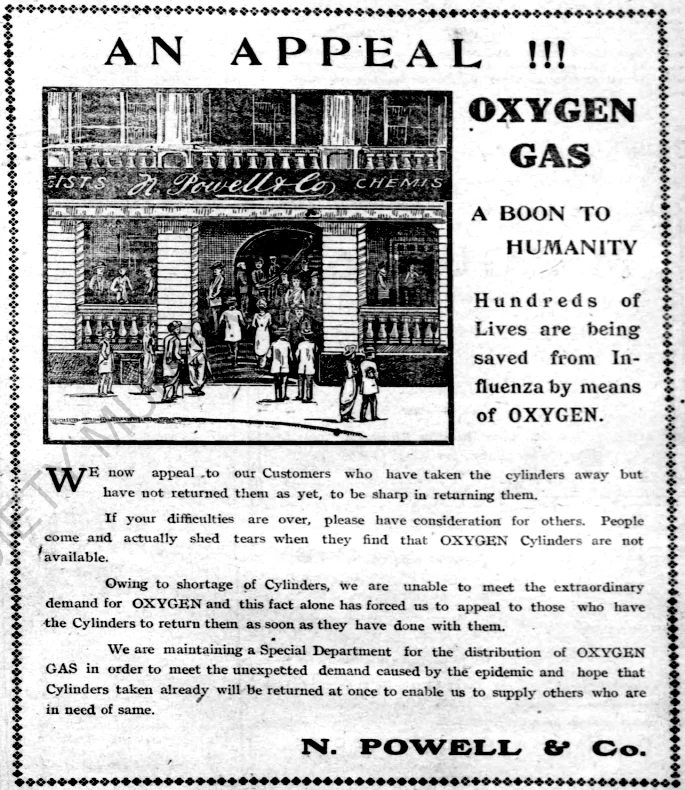
The firm’s reputation helped it grow into the leading supplier to military and civilian authorities in India. During and after the first World War, when over a million Indian soldiers returned from Europe and the Middle East via the port of Bombay – bringing with them the global influenza pandemic – Powell’s were contractors for the British War Office.
Advertisement by N. Powell’s for compressed oxygen gas during the 1918 influenza pandemic in Bombay
The company equipped the largest war and field hospitals and troop ships docked in the city, and Dr Nair often treated wounded soldiers free of charge at its lab and showroom at Lamington Road.
Dr Nair devoted his postwar business fortune entirely to charities that still bear his mother’s name, most notably the hospital. He provided the land and funds to build the new charitable hospital and medical college next to a plot he had just sold to the railways for the construction of Bombay Central Station.
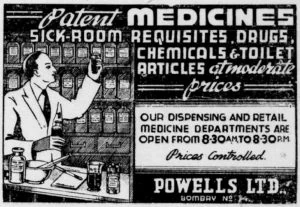
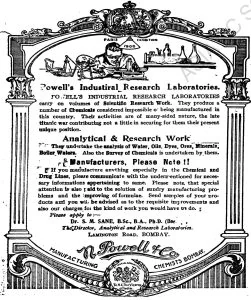
Advertisements for N. Powell’s in the Bombay Chronicle (above, 1942, below, 1918–1919)
Nair endowed the new institution to “give free medical aid to poor suffering people of this locality irrespective Colour, Caste and Creed where such aid is badly needed”. The institution sought to further Gautama Buddha’s three principles of tolerance, non-violence, and universal love. A devout Buddhist, Dr Nair had started the Bombay Buddha Society years before in 1920.
“Give free medical aid to poor suffering people of this locality irrespective Colour, Caste and Creed where such aid is badly needed.”
The new buildings of the BYL Nair Charitable General Hospital were opened to the public on 7 May 1925. The fifty-bed hospital was managed by NMC professors and staff, with Dr R.H. Bhadkamkar as its first Chief Medical Officer. The hospital was built and equipped by Dr Nair’s firm N. Powell’s, with indigenously made instruments and equipment, and donations by the Bombay Red Cross Society, Johnson & Johnson’s and other firms and well-wishers.
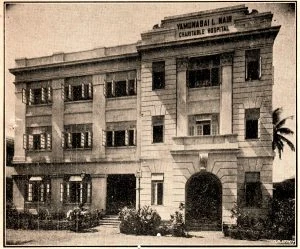
The original buildings of Bai Yamunabai L. Nair Hospital, from its first Annual Report, 1925–26
Even as the hospital was nearing completion, splits in the college leadership had begun to emerge over the issue of professional licensing of its graduates. In its first three years NMC had affiliated to the Tilak Maharashtra Vidyapeeth in Pune for granting a basic diploma, but with no license to practice. As a condition of recognition by the College of Physicians and Surgeons for the licentiate degree (L.C.P.S.), the British Surgeon General of Bombay insisted the college drop the Ayurveda and Yunani subjects in the original curriculum.
Dr Sathaye and others opposed the licentiate, which they regarded as an inferior degree. They did not wish to give up teaching indigenous systems alongside modern Western medicine, part of the college’s founding mission. Dr Sathaye resigned in protest. College co-founder and physiology professor Dr R.H. Bhadkamkar took over as college superintendent. He and Dr Kothare had to pacify unhappy students and assure them the licentiate was a step towards the more desirable M.C.P.S. and M.B.B.S. degrees.
Faced with no opportunity for its students to work as registered practitioners, and disqualification of the college under recent colonial laws against fake degrees and doctors, the College Council applied for recognition. This was granted by Government in January 1925, for a modified four-year course leading to the L.C.P.S. degree. With the new hospital opening several months later, the NMC and BYL Nair Hospital were now on a firm institutional foundation.
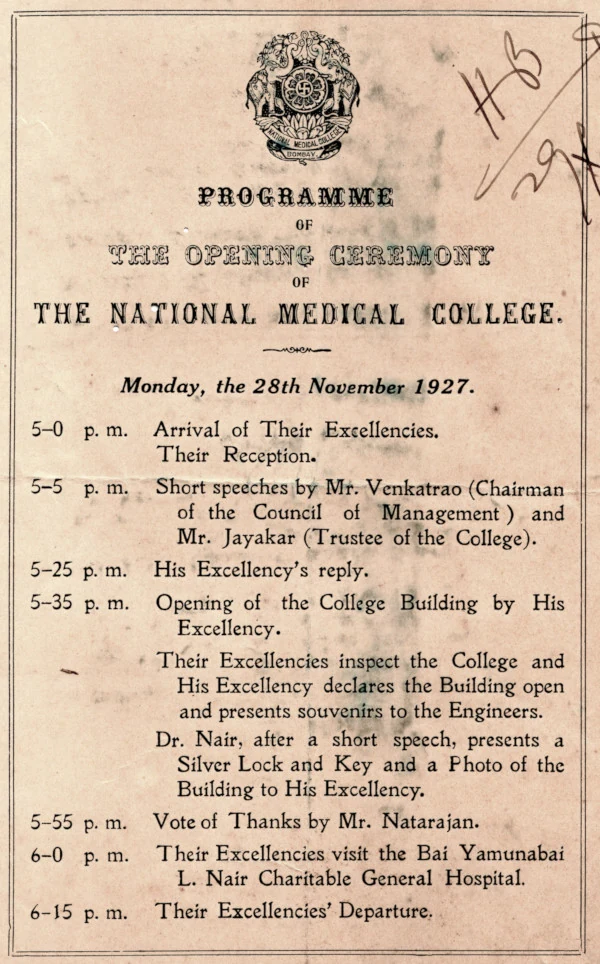
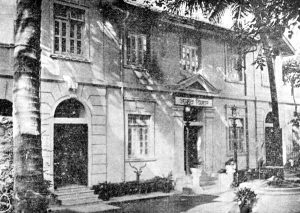
On Buddha Jayanti, 6 May 1926, foundations were laid for a large new building for the National Medical College in the compound of BYL Nair Hospital, which was opened by the Governor of Bombay on 28 November 1927. Six years since its foundation in Byculla, over two hundred students were enrolled, and many of its graduates had entered practice and service.
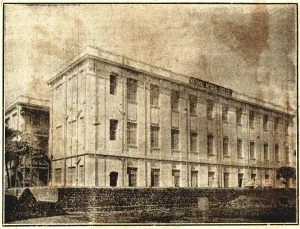
New building of the National Medical College at Bombay Central, from the Indian National Herald newspaper, November 1927Invitation to the Opening Ceremony of the National Medical College building at Bombay Central, November 1927
In addition to the main hospital, the college also operated a maternity home in municipal chawls at Mahalaxmi and an Ayurvedic dispensary in the textile mill districts in Parel. In 1933 the BYL Nair Dental College was started from the Dental Hospital which had housed the dental surgery course since 1923.
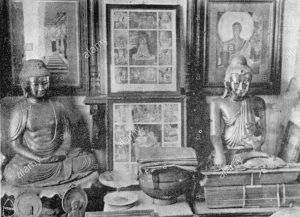
In 1931, Dr Nair inaugurated Mumbai’s first Buddhist temple and monastery, called “Anand Vihara”, in the hospital and college compound. Run by the Bombay Buddha Society which he had started in 1920, it held weekly lectures and prayers, published a periodical called Buddha Prabha and new translations of Buddhist texts in Indian languages. The resting-house and public shrine was open to visiting monks and pilgrims who came from across Asia, Europe and America.
The “Anand Vihara” Buddhist temple and monastery started by Dr Nair in the hospital-college compound in 1931 (Buddhist Annual of Ceylon)
Dr M. Venkatrao, chairman of the college council for over two decades
After Dr Nair’s death in 1934, his business and charities were run by his brother-in-law, radiologist and physiotherapist Dr M. Venkatrao, who was elected chairman of the college in 1927 and stepped into Dr Nair’s role as its chief benefactor and manager in the following years.
The number of hospital beds was increased to 75 in 1934, and new nurses’ and staff quarters built. During World War II, more beds and staff were added, even as the cost and demand for medical care increased manifold.
By the end of World War II in 1945, the college and hospital approached a financial crisis as its expenses had tripled. In its first 25 years, from its inception during Non-Cooperation in 1921 to 1946, the college and hospital was entirely supported by donations and fees, without any government grants.
For its first 25 years, from 1921 to 1946, the college and hospital were supported entirely by donations and fees, without any government grants.
In the year before Independence, 1946, the college embarked on a major expansion and fund-raising drive, to eliminate its debts and qualify for introducing a full-fledged M.B.B.S. degree course. Dr M.D. Gilder, who had lectured at the NMC in its first years in Byculla, was by this time the Education Minister to the Bombay State Government, and pledged further state support.
Dr S. Patrao, who led the expansion in 1946–48 to qualify for M.B.B.S. recognition
The Silver Jubilee Expansion Committee in 1946 was chaired by professor of anatomy and surgery Dr S. Patrao, who had supported the college from its earliest days and ran the Byculla Nursing Home opposite the hospital-college in Bombay Central. Dr Patrao had taken over from Dr Venkatrao, and under his leadership over fifteen lakhs were raised to upgrade facilities.
The faculty and students organised a city-wide fund-raising campaign through public exhibitions, performances and parades for the Silver Jubilee. Dr Nair’s family donated the former N. Powell’s & Co. factory at Bombay Central, which was remodelled into an annexe to the first hospital, with new operation theatres, wards and staff quarters. The hospital grew to 300 beds, and the college’s laboratories and equipment were upgraded to M.B.B.S. standards.
Motiram K. Desai Topiwala, businessman and philanthropist, after whom the college was officially renamed in 1948
Also in 1946, local merchant and manufacturer Seth Motiram K. Desai “Topiwala” donated five lakhs to the college, which in 1948 was officially renamed Topiwala National Medical College (TNMC) after himself and his late father Raobahadur Anant Shivaji Desai (who became known in the city as “Topiwala” for his skilled craft of making hats and turbans).
By Independence, the college and hospital were taken over by the Bombay Municipal Corporation (BMC) by agreement with the trustees and management. The TNMC became one of the public hospitals and medical colleges in the city, with a full-fledged MBBS degree recognised by Bombay University.
Honouring the legacy of its pioneering founders, in 1948, the erstwhile Lamington Road – which runs north from the old N. Powell’s showroom and office near Opera House to the campus at Bombay Central – was renamed by the BMC for Drs Nair and Bhadkamkar, and the old Benham Hall Lane in Girgaon renamed for Dr D.D. Sathaye.
State Education Minister Dr M.D.D. Gilder at the ceremony to rename the National Medical College after Motiram Topiwala and the Lamington Road for Drs Nair and Bhadkamkar in October 1948
A decade later, the college and hospital acquired additional land north of the original campus, and in 1968 the college and hospital were completely demolished and rebuilt as the modern multi-storeyed structures known today as the TNMC and BYL Nair Hospital.
Carry the legacy
Our history is still being written
Join fellow TNMCites across America and help shape the next century of our alma mater.